
LinkedIn Just Changed How Your Content Gets Seen
Sep 30, 2026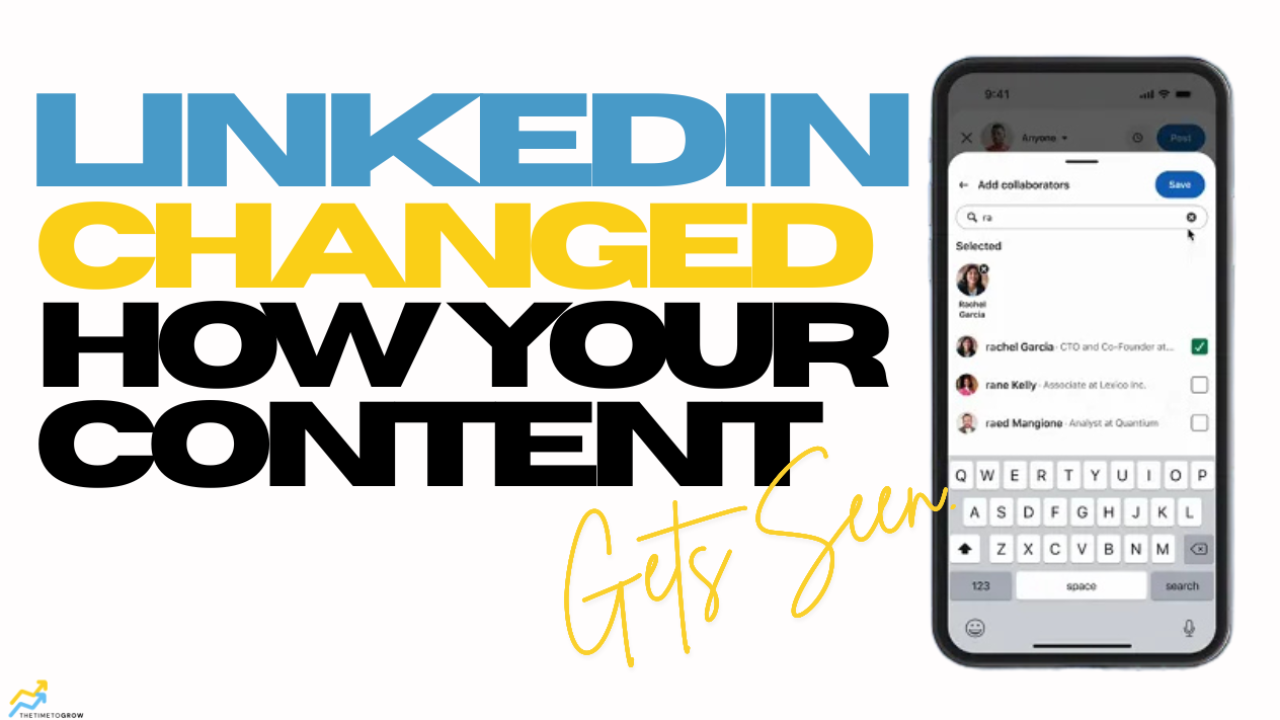
If you're a coach, consultant, or service professional using LinkedIn to attract clients, who sees your content is shifting.
Three changes are driving it. LinkedIn now lets you publish posts with collaborators. The feed is getting sharper at matching content to the right people. And low quality AI content is getting a much harder look.
None of this is a reason to panic. Each change rewards the people already doing the work the right way... being specific, being human, and building real relationships.
Here's what's changing and what we'd do about it.
Collaborative Posts: Publish With Up to Five People
For years, the closest thing to co creating a LinkedIn post was tagging someone and hoping they reshared it.
Collaborative posts change that. You can invite up to five connections or Company Pages to collaborate on a single post. When they accept, their names appear on the post, and it shows up on their profiles too.
That's the big difference from tagging. A tag points at someone. A collaboration puts your post in front of their audience, not just yours.
A few things to know before you try it:
-
The feature is rolling out gradually, so you may not have it yet.
-
The people you invite may also need access before they can accept.
-
Collaborative posts must be public.
-
It works on most post types, including text, image, video, document posts, and polls.
-
Collaborators have to accept. If they decline, the post stays on your profile only.
To see if you have it on desktop, click Start a post, write your post, and look for Add collaborators at the top of the composer near your name. Search for your connections, select them, click Save, and post.
On mobile, tap Post, write your content, tap the dropdown next to your profile picture, and select Add collaborators.
One ground rule... ask first. Even though collaborators have to approve the invite, don't add anyone without talking to them. A surprise invite is not a great way to start a partnership.
Where collaborative posts make the most sense:
-
Clients you're celebrating a milestone with.
-
Podcast guests, when you share the episode they were on.
-
Strategic partners sharing a joint point of view.
-
Events, like a virtual summit where you add your speakers so the post reaches each of their networks.
The Feed Is Getting Smarter About What You're Known For
LinkedIn is getting better at understanding what your content is actually about and who it's for.
That makes broad content harder to place. If you post about leadership on Monday, productivity on Tuesday, and a trending topic on Wednesday, LinkedIn struggles to figure out who should see you.
When you consistently talk about the problems you solve, for the people you serve, you're teaching LinkedIn exactly who to show your content to.
Here's what that means for your content:
-
Specific beats broad. A post on how attorneys can explain retainers without losing the client gets matched faster than general tips for growing a practice.
-
Relevance matters more than follower count. A smaller network full of the right people can outperform a big one full of the wrong ones.
-
Repetition is a strength, not a flaw.
Some people are seeing their reach dip. At the same time, we're hearing from others who are booking more calls and having better conversations, because their content is reaching the people who actually need it.
We'll take fewer likes and more of the right conversations every time.
It's Old to You. It's New to Someone Else
Talking about the same topics over and over can feel repetitive. We get it.
We've taught how to add notes to LinkedIn connection requests several times this year alone. One of our Expert Authority members put it perfectly on a coaching call: it might be old to you, but it's new to someone else.
Think about your favorite band. They've played their biggest songs more times than they can count, and every night someone in the crowd is hearing them live for the first time.
Your network works the same way. New people find you every day and read your content for the very first time.
Consistency also helps you find your voice. The more you talk about the same themes, the sharper your point of view gets, and the faster you become known for it.
AI Content Is Getting a Closer Look
LinkedIn is actively working to reduce low quality AI content. Members can now flag a post through the three dot menu by selecting Seems like AI slop.
Does a flag shut down your account? No. It isn't shown publicly, and it appears in your post analytics. But it can knock that post's reach down a few notches.
Two things we want to be clear about.
First, don't be a troll. This isn't an invitation to report everyone you suspect used AI. A lot of people are learning these tools for the first time, and early attempts are messy. Give people some grace.
Second, LinkedIn isn't trying to get rid of AI. It wants people to use it well.
The real problem is generic content with no point of view. No stories, no experience, nothing that could only come from you. That's what readers are tired of, and that's what hurts visibility.
AI Should Support Your Voice, Not Replace It
Treat AI like any other tool in your business, the same way you'd use your website, a lead magnet, or a scorecard. It can help you draft, organize, and get unstuck. It can't be you.
What makes your content worth reading is what AI doesn't have:
-
Your personal stories.
-
Your experience with real clients.
-
Your opinions, including the unpopular ones.
-
The lessons you learned the hard way.
The parts of your life outside work matter too. One of us competes in bench press, and that connects us with people a LinkedIn tip never would. Marathon runners find each other. CrossFit people find each other. When you loop those interests back to your business, relationships grow faster.
Something we've believed for a long time still holds: stop outsourcing your voice before you've figured out what it is. Not to AI, and not to anyone else.
What to Do This Week
-
Make a short list of clients, podcast guests, partners, or event speakers you'd like to collaborate with, and ask them first.
-
Pick the two or three problems you want to be known for solving, and keep your content anchored there.
-
Before you publish anything AI helped create, add something only you could say, like a story, an example, or an opinion.
LinkedIn isn't changing the goal. It's rewarding the people who show up with specific, consistent, human content. Those are the people getting seen now.
Ready to turn LinkedIn visibility into consistent, qualified clients?
Content alone isn't a business growth system. It's one piece of it.
Expert Authority is our 12 month coaching mastermind built around the LinkedIn Growth Engine™. It includes weekly live coaching calls with us, quarterly business audits, and done for you tools, templates, and scripts, with a community building the same thing right alongside you.
Doors are open now and close Monday, October 5th at 9 PM EDT.
